
Performance Management Is a Two-Way Street. Gen Z Already Knew That.
Many of you know that alongside fractional HR and leadership coaching, I also teach at Virginia Tech. I love it because I have a front row seat to our future team members. This week, I asked my students to design a performance management system from scratch. What would it include, how often would conversations happen, and what would actually make it work?
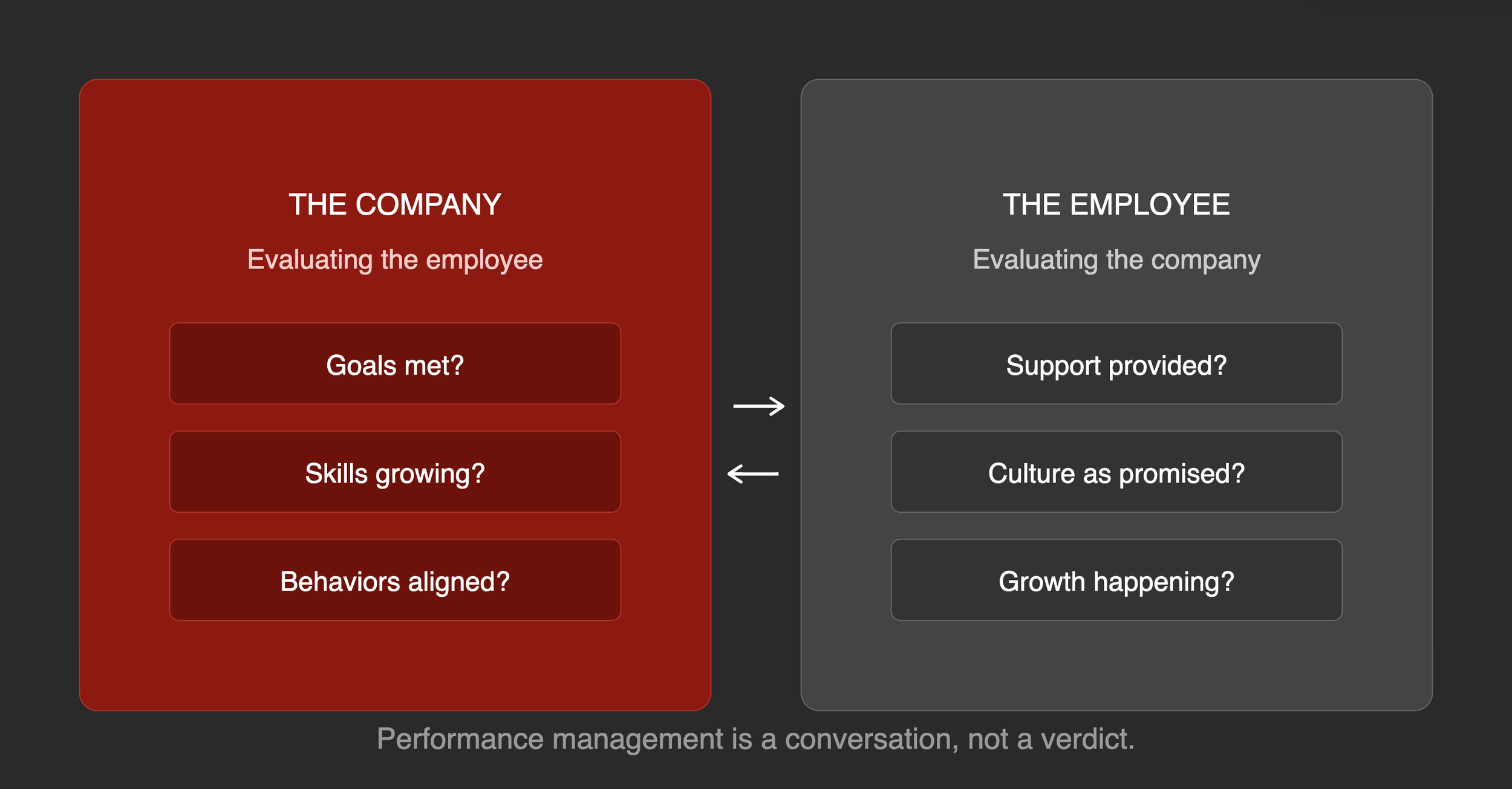
One group said something that stopped me mid-sip of coffee: they’d build in a section where employees score the company on how well it’s holding up its end of the deal.
I loved it. Not because it’s radical, but because it’s honest.
Here’s what Gen Z already understands that many leaders and organizations are still catching up to: performance conversations aren’t a monologue.
They’re a negotiation. And according to Deloitte’s 2024 Global Gen Z and Millennial Survey, 74% of Gen Z employees already find traditional annual performance reviews inadequate. That’s not entitlement. That’s a signal.
Think about how this generation approaches job interviews. They walk in having researched your Glassdoor rating, your CEO’s LinkedIn activity, and what your former employees said on the way out. They’re evaluating you just as hard as you’re evaluating them. Why would the performance conversation be any different once they’re hired?
It shouldn’t be. And the data backs that up.
Research shows Gen Z expects feedback to flow both ways, with the idea of contributing their own organizational feedback scoring a 4.40 out of 5 in workplace preference studies, because they believe it leads to a better environment for everyone. They’re not asking to avoid accountability. They’re asking for the same thing every good leader should want: a real conversation, not performance review theater.
68% of Gen Z want feedback at least once a week, according to Gallup’s 2024 State of the Global Workplace report. And per Randstad’s 2025 global survey of over 11,000 workers, Gen Z’s average tenure in the first five years of their career is just 1.1 years. Those two stats are not unrelated.
If you’re still waiting until the end of the year to tell someone what they should have done differently, you’ve already lost them, literally and figuratively.
So what can you do right now, without overhauling your entire PM process?
1. Make it a conversation, not a report card. Come to check-ins with questions, not just assessments. Ask what’s getting in their way, what support they need, what they wish was different. You might not love every answer, but you need to hear it.
2. Shorten the loop. Waiting 12 months to course-correct is a retention strategy in reverse. Even informal monthly touchpoints shift the dynamic from evaluative to developmental. And development should always be the goal of performance management.
3. Ask them to score you. Seriously. Add one question to your next check-in: “What’s one thing I could do to better support your success?” You don’t have to act on everything, but asking signals that this relationship runs both directions.
The students who designed that two-way scoring system weren’t being idealistic. They were describing what good management actually looks like.
The only question is whether you’re ready to be evaluated too.
